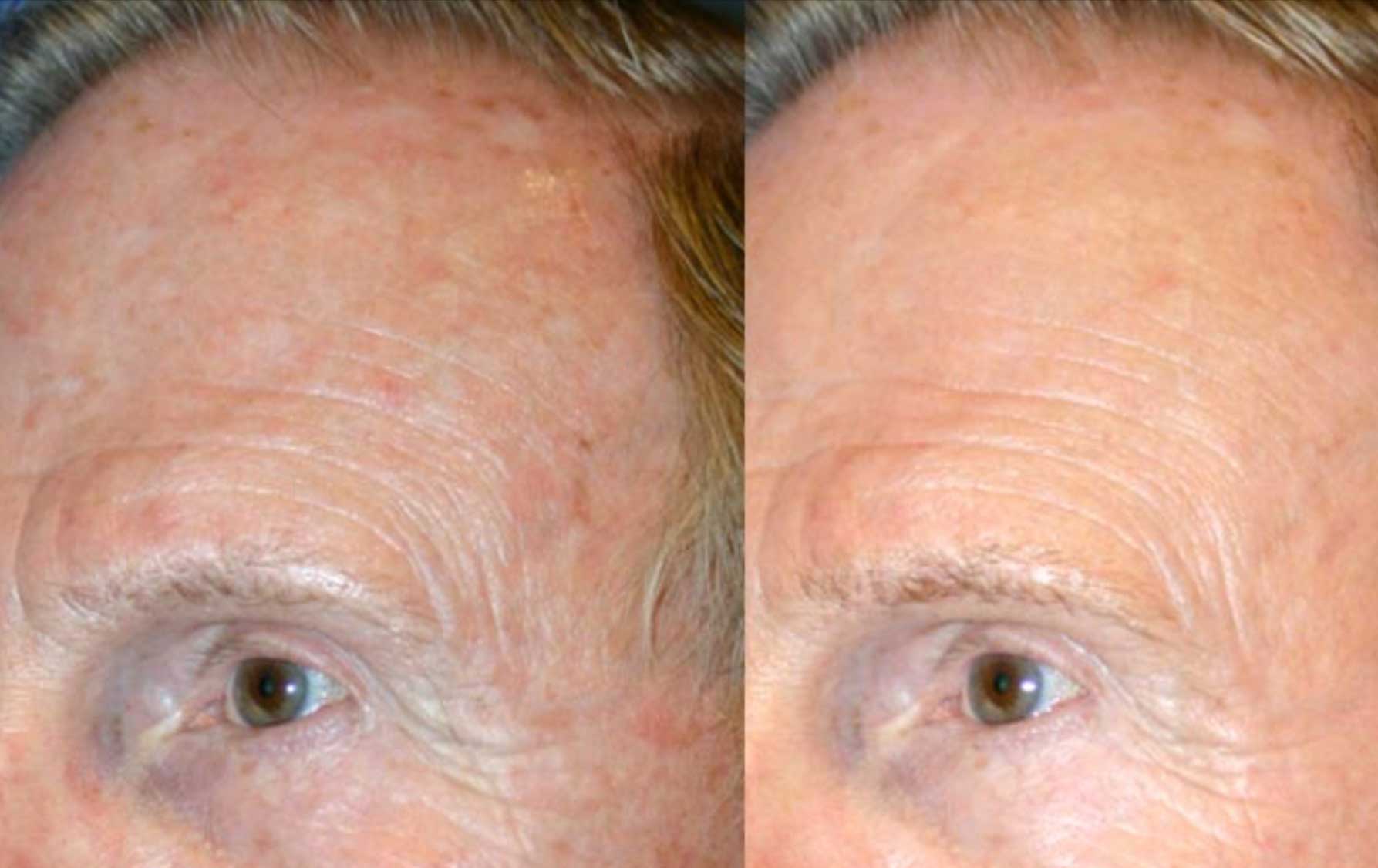
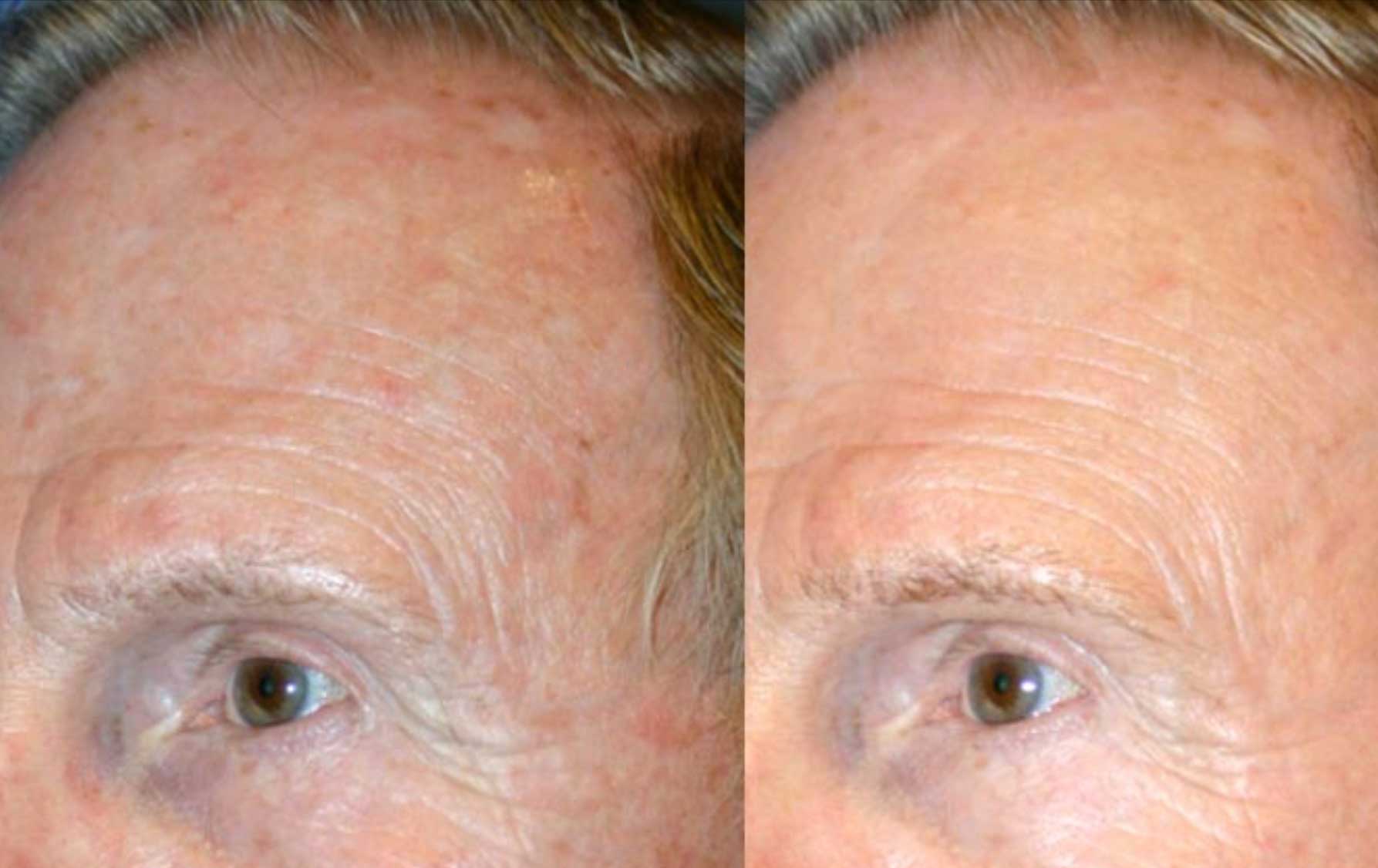
Photodynamic Therapy with Levulan® Kerastick® and BLU-U blue light is the most effective treatment available for actinic keratoses — precancerous skin lesions caused by cumulative sun damage. One to three treatments. No surgery. Excellent cosmetic outcomes.
Important: Levulan Kerastick PDT is FDA-approved for the treatment of minimally to moderately thick actinic keratoses of the face, scalp, and upper extremities. Early treatment is medically recommended — untreated AKs can progress to squamous cell or basal cell carcinoma. If you have visible AK lesions, this is a medical concern, not just a cosmetic one.
Actinic keratosis (AK) is a precancerous skin condition caused by years of cumulative sun exposure. Lesions typically appear as rough, scaly patches on sun-exposed skin — the face, scalp, hands, forearms, and ears. They're extremely common in adults over 40 and become more numerous with age. The critical concern: without treatment, some AKs progress to skin cancer.
Rough, scaly, or crusty patches on sun-exposed skin
Red, brown, or skin-colored lesions that don't resolve on their own
Itching, burning, or stinging in affected areas
Lesions ranging from 1–3mm or larger
Multiple lesions close together in the same area
Skin surrounded by general redness or irritation
Levulan Kerastick (20% aminolevulinic acid HCl) is applied to actinic keratoses, where it is selectively absorbed by the abnormal cells. After an incubation period, blue light from the BLU-U illuminator activates the photosensitizer — producing a photodynamic reaction that selectively destroys the abnormal cells while leaving healthy surrounding tissue intact.
The treatment is a two-stage process. Levulan is applied to the target lesions in office, then after an incubation period, the area is illuminated with blue light for approximately 16–17 minutes. Most patients require 1–3 treatments, spaced several weeks apart. Lesions that haven't fully resolved 8 weeks after initial treatment may be retreated.
After treatment, most patients experience redness, swelling, and peeling lasting 7–9 days, fully resolving within 3–4 weeks. Darker pigmented patches temporarily darken before peeling away to reveal normal skin. Sun protection is essential throughout the healing period. Most patients report the treatment as mild and tolerable.
In the office, Levulan Kerastick solution is applied directly to the actinic keratosis lesions. The treated area becomes photosensitive. Patients are instructed to avoid sunlight and bright indoor light during the incubation period and must wear protective covering outdoors.
After the incubation period, the patient returns for blue light treatment using the BLU-U illuminator — approximately 16–17 minutes of blue light exposure activates the photosensitizer. Most patients experience mild, tolerable stinging or warmth during this phase.
The treated lesions become red and may swell, crust, and peel over 7–9 days. Darker spots temporarily darken before peeling to reveal healthy skin. Full resolution typically occurs within 3–4 weeks. Excellent cosmetic outcomes are routinely observed — the treated area develops more uniform color, texture, and tone.
AK can be treated with liquid nitrogen, Efudex (fluorouracil), Aldara (imiquimod), surgery, and cautery. PDT with Levulan compares favorably across most clinically relevant dimensions — particularly for patients with multiple lesions or who value cosmetic outcome.
Treats the entire affected area — not just individual spots — creating uniform color, texture, and tone
Only 1–3 treatments needed vs. weeks of daily topical application with Efudex or Aldara
No scarring or white spots — unlike liquid nitrogen which can leave permanent pigment changes
Excellent cosmetic outcome — sun damage, fine lines, and blotchy pigmentation visibly improve
Faster healing than surgical approaches — no incisions, no wound care
Well-tolerated — most patients report mild stinging during the light treatment, nothing more
A note on additional benefits: Many patients treated with PDT for actinic keratoses also notice improvement in sun damage, fine lines, skin texture, and pigmentation in the treated area. These photorejuvenation benefits are widely observed in clinical practice. Your provider will discuss what to expect for your specific skin concerns at your consultation.
Individual results vary. Photos shared with patient consent. Results are not guaranteed.
Actinic keratoses are common, treatable, and should be addressed early. Book a consultation at medAge and we'll assess your lesions, confirm the diagnosis, and walk you through your treatment options.
$75 new patient deposit · applied toward your first treatment