
IPL for Skin & Sun Spot Treatments
Medically reviewed by Dr. Sarah Long, Lead Provider · Medical oversight by Dr. Laura Ellis, Medical Director · Updated [Month Year]
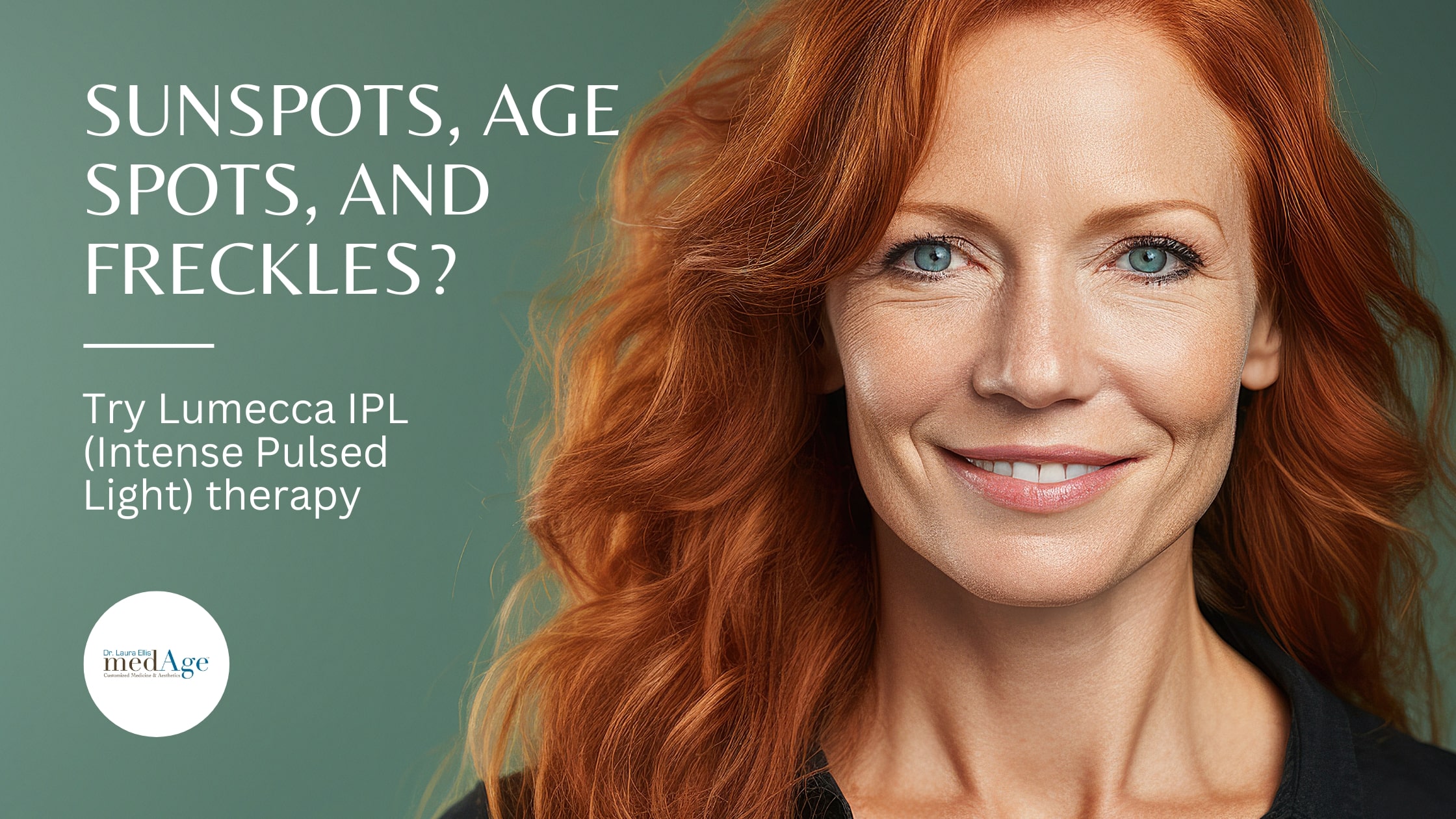
Sun spots, age spots, and freckled brown patches are the most common way years of sun exposure finally show up — usually on the face, chest, and the backs of the hands. They’re harmless, but they add years to how skin reads. IPL photofacial is one of the most effective, lowest-downtime ways to clear them.
The short answer: IPL (intense pulsed light) uses broadband light to break down the extra pigment in sun spots so your body can clear it — without wounding the surface of your skin. Most people need a short series, see spots darken and flake away within days, and have essentially no downtime. At medAge in Asheville, we use the Lumecca IPL.
What causes sun spots in the first place
Sun spots are concentrated deposits of melanin — your skin’s pigment — laid down over years of UV exposure as a kind of record of sun you’ve accumulated. They tend to appear well after the exposure that caused them, which is why they often seem to show up “out of nowhere” in your 40s and 50s. They’re not dangerous, but they are stubborn: creams fade them slowly at best, and makeup only hides them.
How IPL clears them
IPL delivers precisely filtered light into the skin, where it’s absorbed by the melanin in each spot. That light turns to heat, the pigment breaks apart, and over the following days your body carries it away. Because the light passes through the surface rather than removing it, there’s no open wound and little to no downtime — a key difference from resurfacing lasers. In the days after treatment, spots often look darker and coffee-ground-like before they flake off and fade. That’s exactly what’s supposed to happen.
Where it works — it’s not just the face
Sun damage collects wherever the sun reaches, so some of the most rewarding areas to treat are the ones people forget: the chest, the neck, the shoulders, and the backs of the hands. IPL can be tailored to a single stubborn spot or used across a broader area to even out overall tone. For most people, a series of about three sessions, spaced a few weeks apart, gives the most even result.
Why fall and winter are the right time
IPL targets pigment — which means it works best on skin that isn’t tan, and treated skin needs to stay out of the sun afterward. Treating recently sun-exposed skin raises the risk of unwanted pigment changes. That’s why the cooler months, when you’re covered up and out of direct sun, are the ideal window to clear the damage from the summer that just ended.
Now is the season for it. IPL photofacials are 10% off for a single session and 15% off a series of three, through December 31 — the right time to clear this summer’s sun damage.
Is IPL right for your spots?
IPL is a specialist at brown and red discoloration, and for the right skin it’s one of the most satisfying treatments we offer. It works best on lighter, untanned skin; for deeper skin tones, we’ll talk through whether IPL or a gentler approach is safer. And if your concern is really texture or lines rather than color, we may point you toward resurfacing instead — see our guide on CO2 laser vs. IPL. Either way, a quick consultation with Dr. Long or Madison Brookshire, RN, gives you a straight answer.
Individual results vary, and IPL isn’t appropriate for every skin type or for recently tanned skin. A consultation is required to confirm it’s safe and right for you.
Ready to clear years of sun spots — with no downtime? Let’s see if IPL is your match.