medAge Biltmore Park · Suite 218, Asheville NC · Call 828-684-1212 | Financing Available — 0% APR options through PatientFi

Is Filler Safe? An Honest Look at the Risks and How to Choose a Safe Injector
Medically reviewed by Sarah Long, DNP, APRN, FNP-BC — Clinical Lead, medAge  •  Updated June 2026

Dermal filler is one of the most popular aesthetic treatments in the world, and for the vast majority of people it’s safe and uneventful. But if you’ve spent any time online, you’ve also seen the frightening stories. Rather than pretend risks don’t exist, we’d rather do what a good medical practice should: tell you honestly what they are, how they’re minimized, and how to choose a provider who keeps you safe.

The short answer: Serious complications from filler are rare, but they’re not zero — and the single biggest factor in your safety is who is holding the syringe. An experienced, anatomy-trained injector working in a prepared medical setting dramatically lowers your risk.

The risk that matters most: vascular occlusion

Most filler side effects are minor and temporary — swelling, bruising, tenderness. The one serious complication worth understanding is vascular occlusion: this happens when filler is accidentally placed into or presses on a blood vessel, interrupting blood flow to the surrounding tissue. Left unaddressed, it can lead to skin damage and, very rarely, more serious outcomes.

How common is it? Rare. Large studies place the risk of serious vascular complications well under 1% of treatments, with some estimates far lower. But because it’s a genuine medical emergency when it does occur, it deserves respect — and preparation.

Why experience and anatomy are everything

Vascular occlusion isn’t random bad luck; it’s closely tied to injector skill. The face has “danger zones” — areas like around the nose, the glabella (between the brows), and the nasolabial folds — where blood vessels run in predictable but unforgiving places. A well-trained injector knows this anatomy in detail, uses careful low-pressure technique, and — just as importantly — knows when not to inject. The evidence is consistent on this point: risk drops substantially in experienced, properly trained hands.

This is exactly why the “who” matters more than the “where you got a deal.” A rushed injection from someone without deep anatomical training is where risk concentrates.

What a prepared practice looks like

Good injectors don’t just aim to avoid complications — they’re ready for the rare one. In a properly run medical practice, that means:

  • An injector with medical training and thorough knowledge of facial anatomy
  • A written emergency protocol for recognizing and managing a vascular event immediately
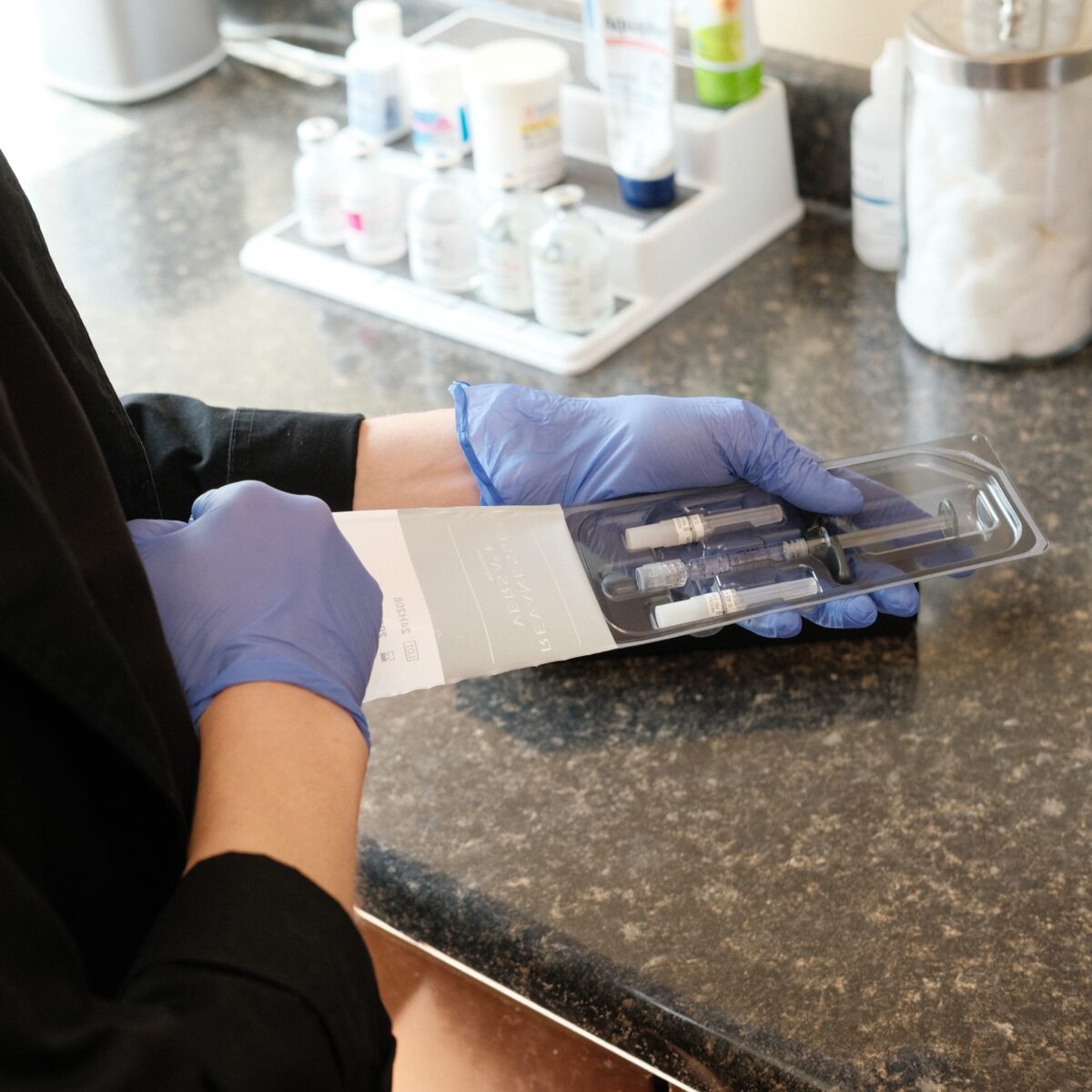
  • Reversal medication kept on hand — for hyaluronic acid fillers, an enzyme called hyaluronidase can dissolve the product in an emergency
  • Time taken for a real consultation, medical history, and honest discussion of your candidacy
  • Clear follow-up and a way to reach the practice quickly if something feels off

These aren’t luxuries; they’re the baseline of safe care. It’s a fair thing to ask any provider about before you book.

Know the early signs. After filler, contact your provider right away if you notice unusual or worsening pain, skin that turns white/blanched or dusky and mottled, or any changes in vision. Prompt action makes an enormous difference in outcomes — so never “wait and see” with symptoms like these. When in doubt, call.

How to choose a safe injector

You don’t need to be an expert to protect yourself — you just need to ask a few good questions:

  • Are you a licensed medical professional, and who is the supervising physician?
  • How much experience do you have with this specific treatment and area?
  • What’s your protocol if a vascular complication happens — and do you keep reversal medication on site?
  • Can we talk through my options and risks before anything is decided?

A confident, experienced provider will welcome these questions. Anyone who brushes them off is telling you something important.

Important: This article is general education, not medical advice, and it can’t diagnose or treat any individual situation. Good technique lowers risk but cannot eliminate it entirely. If you’ve had filler and are experiencing concerning symptoms, contact your provider or seek medical care promptly.

The bottom line

Filler is safe for most people most of the time — and it’s safest in the hands of a trained medical injector working in a practice built for it. That’s the standard we hold ourselves to, and it’s the standard you deserve wherever you go.

Frequently asked questions

Is dermal filler safe?

For most people, yes. The majority of side effects are minor and temporary, like swelling or bruising. Serious complications are rare — well under 1% of treatments — and are minimized most by choosing an experienced, medically trained injector in a prepared setting.

What is vascular occlusion?

It’s the serious but rare complication where filler blocks or compresses a blood vessel, interrupting blood flow to nearby tissue. It’s a medical emergency that requires prompt recognition and treatment, which is why injector experience and practice preparedness matter so much.

How do I choose a safe filler injector?

Look for a licensed medical professional with strong knowledge of facial anatomy, real experience with your specific treatment, a clear emergency protocol, and reversal medication kept on site. A good provider will happily answer these questions.

Want to meet a medical team that treats safety as the standard, not an afterthought? We’d be glad to talk through your goals at a consultation.

Meet the medAge medical team →

Can Radiesse Tighten Skin? How One Filler Does Both Lift and Skin Quality

Medically reviewed by Sarah Long, DNP, APRN, FNP-BC — Clinical Lead, medAge  •  Updated June 2026

Most people think of Radiesse as a filler for adding structure — a firmer jawline, more defined cheeks. But one of its most useful qualities rarely gets explained: depending on how it’s prepared, the very same product can be used to improve skin quality and firmness across broad, delicate areas like the neck, chest, and hands.

The short answer: Yes — when diluted, Radiesse can be used to help tighten and smooth crepey skin, not just add volume. Adjusting how thick or thin the product is changes what it does in the skin, which is why a single filler can serve very different purposes in skilled hands.

The thing most people don’t know: Radiesse is adjustable

Radiesse is made of calcium microspheres suspended in a gel. That gel can be mixed with additional sterile fluid before treatment — a step your injector controls. How much fluid is added changes the consistency of what’s placed in your skin, and that consistency determines the job it’s best suited for.

Think of it a little like the difference between frosting and glaze made from the same base. Thicker and firmer holds a shape and lifts. Thinner and more spreadable coats a wider surface and refines texture. It’s the same idea here.

What changes when Radiesse is diluted

In its standard form, Radiesse is firmer and holds its position — ideal for adding lift and definition where you want structure, like the jawline (an FDA-approved use) or cheeks. When it’s diluted, it becomes thinner and spreads more evenly through a layer of skin, where the goal shifts from “add volume here” to “improve the quality of the skin overall” — stimulating collagen across a broader area to firm and smooth.

Standard RadiesseFirmer consistency. Used for structural lift and contour — jawline, cheeks, definition. Holds its shape where placed.
Diluted / hyperdilute RadiesseThinner, spreadable. Used to improve skin quality and firmness across areas like the neck, chest, and hands — smoothing crepey texture.

Where diluted Radiesse tends to shine

The diluted approach has become a well-recognized technique for skin-quality concerns that traditional filler doesn’t address well — the kind of thin, crepey laxity that shows up on the neck, the décolletage (chest), and the backs of the hands. Rather than plumping a single line, it works to firm and refresh the whole surface over time as your own collagen responds. There are published expert consensus guidelines specifically covering the use of diluted and hyperdiluted calcium hydroxylapatite for these skin-tightening purposes.

Why this matters for you

The practical upside is versatility. Instead of needing a different product for every concern, a single, well-understood biostimulator can be tailored to the job — structure where you want it, skin refinement where you need it. For your provider, that means the plan is built around your anatomy rather than around what’s in the drawer.

Important context: Diluting Radiesse for skin-quality and skin-tightening purposes is a technique used at your provider’s discretion and falls outside Radiesse’s specific FDA-approved uses. It’s supported by published expert consensus and clinical experience, but the science on exactly how diluted formulations behave is still an area of active discussion. Results build gradually and vary from person to person — this is a tailored clinical decision, not a guaranteed outcome, and it’s made together at consultation.

The takeaway

If you’ve been told filler couldn’t help crepey skin on your neck or chest, it’s worth a second conversation. The answer may not be more volume — it may be the same trusted product, prepared differently.

Frequently asked questions

Can Radiesse tighten skin on the neck and chest?

Diluted Radiesse is commonly used as a technique to improve skin firmness and crepey texture on the neck, chest, and hands by stimulating your own collagen. It’s an off-label use supported by expert consensus; results develop gradually and vary by person.

Is hyperdilute Radiesse the same product as regular Radiesse?

Yes — it’s the same Radiesse, mixed with additional sterile fluid before treatment so it spreads more thinly through the skin. The dilution changes how it behaves, shifting the focus from structural lift toward overall skin quality.

How soon will I see results?

Because these effects rely on your body producing new collagen, improvement builds over weeks to months rather than appearing instantly. Your provider will set realistic expectations based on the area treated and your skin.

Wondering whether Radiesse could help your skin quality — not just add volume? Let’s talk it through at a complimentary consultation.

Explore Radiesse at medAge →

Biostimulator vs. Regenerative: They’re Not the Same Thing

Medically reviewed by Sarah Long, DNP, APRN, FNP-BC — Clinical Lead, medAge  •  Updated May 2026

“Biostimulator.” “Regenerative.” “Collagen-building.” These words get used interchangeably in aesthetics marketing — but they don’t all mean the same thing. Understanding the difference will make you a sharper consumer, and it explains why we’re particular about the products we use.

This is a short, useful distinction that almost no clinic bothers to explain. Once you have it, a lot of the marketing you see online becomes easier to read.

What “biostimulation” actually means

Biostimulation simply means prompting your body to produce more of a specific biological building block — most often collagen. A biostimulatory treatment doesn’t just sit there adding volume; it signals your cells to get to work making something.

That’s genuinely valuable. But notice how narrow the definition is: stimulate the production of one component. By itself, that doesn’t say anything about whether the tissue is truly rebuilt or restored to how it functioned when it was younger. Stimulating collagen is a piece of the puzzle — not the whole picture.

What “regeneration” means — and why it’s a higher bar

Regeneration is a bigger idea borrowed from regenerative medicine. It means the actual repair and restoration of tissue so that it regains not just its structure but its function — behaving like healthy, younger tissue again.

Here’s the key logic, and it’s worth reading twice: something can be biostimulatory without being regenerative, but anything regenerative is, by definition, also biostimulatory. Stimulating collagen is one ingredient. Regeneration is the finished dish — collagen plus the other structures that make skin behave the way it did years ago.

Your skin is more than collagen

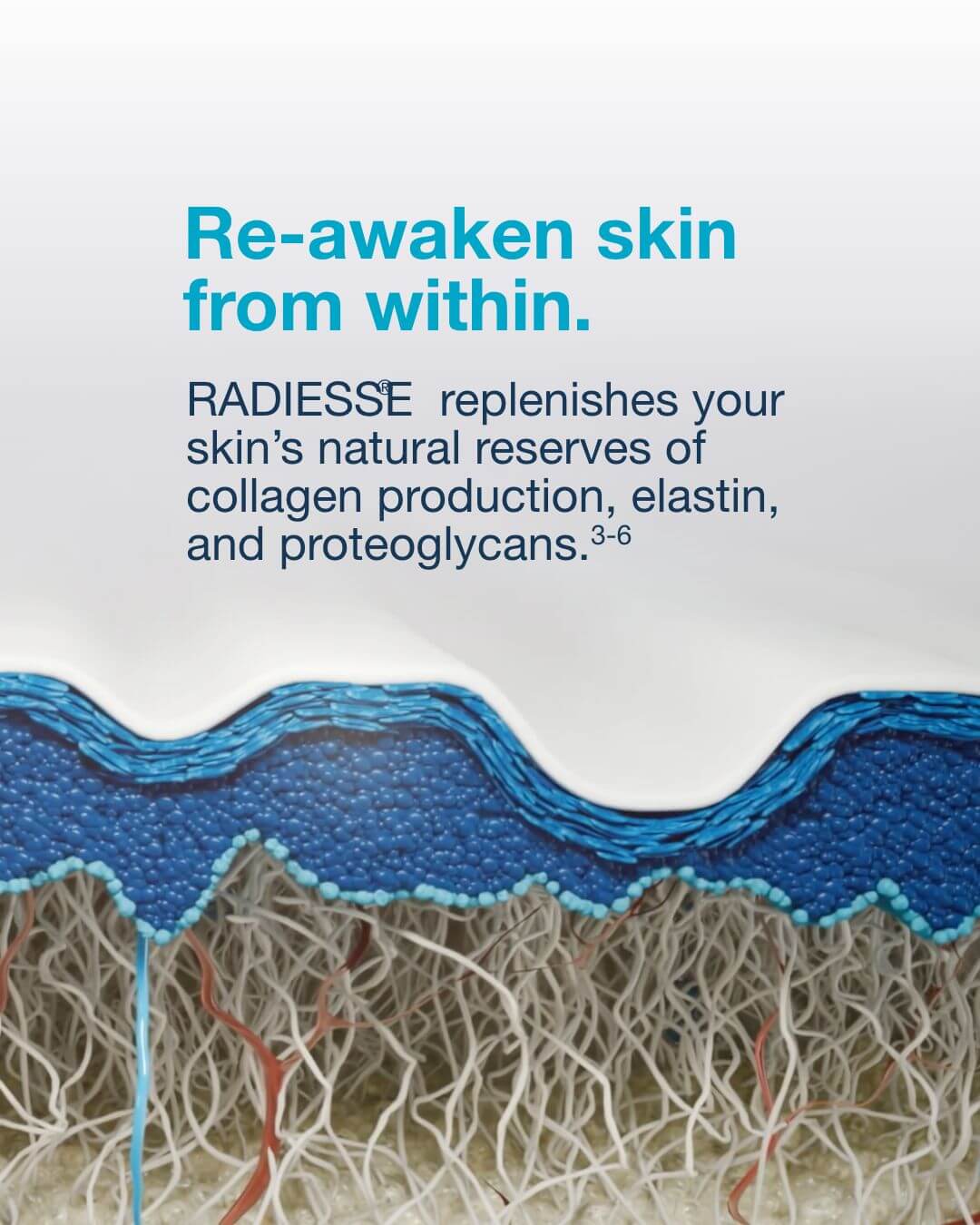
To understand why the distinction matters, it helps to know what actually gives youthful skin its quality. It isn’t collagen alone. Skin’s support system — the extracellular matrix — is a whole ecosystem:

CollagenThe scaffolding that gives skin structure and firmness.
ElastinThe springy fibers that let skin stretch and snap back.
ProteoglycansWater-binding molecules that keep skin hydrated and plump from within.
VasculatureThe tiny blood vessels that oxygenate and feed the skin.

As skin ages, all of these decline together — not just collagen. So a treatment that only nudges collagen is addressing one part of a much larger system. True regeneration means rebuilding across the ecosystem.

Where this lands for the products we use

This is exactly why we favor calcium hydroxylapatite (Radiesse) as a biostimulant. In peer-reviewed literature, Radiesse has been shown to do more than stimulate collagen — it acts as a scaffold that prompts increases in collagen, elastin, proteoglycans, blood vessels, and the fibroblast cells that build all of it. In other words, it works across that whole ecosystem, which is why it’s increasingly discussed under the banner of “regenerative aesthetics” rather than simply “a collagen stimulator.”

That’s not a knock on other biostimulators — many are excellent at what they do. It’s a distinction about scope: stimulating one component versus restoring the broader matrix. When the goal is genuine skin-quality improvement and not just a temporary plump, that broader scope is what we’re after.

A fair note on the science: “Regenerative aesthetics” is an emerging and still-developing field. Much of the supporting work consists of expert reviews and smaller studies rather than large long-term trials, and results vary from person to person. We find the evidence compelling and use it to guide our choices — not as a guarantee of any specific outcome.

The takeaway

When you see a treatment marketed as “collagen-building,” it’s fair to ask a follow-up: is it just stimulating collagen, or is it helping restore the whole support structure of your skin? That single question separates a lot of the noise from the substance — and it’s the kind of thing we’re always happy to walk through with you in person.

Frequently asked questions

What is a biostimulator?

A biostimulator is a treatment that prompts your body to produce more of a biological building block — usually collagen — rather than simply adding volume. Radiesse and Sculptra are two of the best-known injectable biostimulators.

Is Radiesse regenerative or just a biostimulator?

Peer-reviewed literature describes Radiesse as doing more than stimulating collagen — it prompts increases in collagen, elastin, proteoglycans, blood vessels, and fibroblasts, which is why it’s increasingly discussed within “regenerative aesthetics.” The field is still developing, so results vary by person.

What is regenerative aesthetics?

It’s an emerging approach that aims to restore youthful skin structure and function using the body’s own repair systems, rather than only filling lines. It’s a growing area of research, though much of the evidence is still early.

Want to understand which approach fits your skin and your goals? Let’s talk it through at a complimentary consultation.

Explore biostimulators at medAge →

Radiesse vs. Sculptra: Why We Reach for a True Biostimulant

Medically reviewed by Sarah Long, DNP, APRN, FNP-BC — Clinical Lead, medAge  •  Updated April 2026

Radiesse and Sculptra get grouped together online as “the collagen-building injectables” — as if they’re interchangeable. They aren’t. They’re built from different materials, they work through completely different biology, and that difference is exactly why we prefer one of them for most patients.

If you’ve been researching biostimulators in Asheville, you’ve probably run into a lot of confident-sounding, contradictory information. Here’s the clear version, grounded in what the science actually shows.

First — what is a “biostimulator,” and how is it different from regular filler?

Most fillers you’ve heard of are made from hyaluronic acid (HA) — think Juvéderm and Restylane. They add volume immediately by holding water where they’re placed, and your body gradually breaks them down over months.

Biostimulators work differently. Instead of just filling a space, they prompt your own skin to build new structural tissue — collagen and elastin — over time. The result develops more gradually and is about improving the quality and firmness of the skin itself, not just plumping a line. Radiesse and Sculptra are the two best-known injectable biostimulators. That’s where the similarity ends.

Radiesse: calcium microspheres that work by contact

Radiesse is made of calcium hydroxylapatite (CaHA) — tiny, smooth, perfectly round microspheres suspended in a gel. Calcium hydroxylapatite is a substance your body already recognizes; it’s a mineral found naturally in bone.

Here’s the part that matters. Under a microscope, Radiesse particles are uniform and spherical, mostly 20–45 microns across. When placed in the skin, they act as a physical scaffold that your fibroblasts — the cells responsible for making collagen — grab onto directly. That direct mechanical contact switches the fibroblasts “on” and prompts them to produce fresh collagen and elastin. Scientists call this mechanotransduction. In plain terms: Radiesse regenerates by touch, not by irritation.

Because the process doesn’t primarily rely on provoking an immune reaction, the results tend to be predictable — and the calcium microspheres are gradually resorbed over roughly a year or so, while the new collagen they helped build remains.

Sculptra: poly-L-lactic acid that works by inflammation

Sculptra is made of poly-L-lactic acid (PLLA), a synthetic material. Under the same microscope, PLLA looks nothing like Radiesse — it appears as irregular flakes of widely varying size and shape (roughly 2 to 150 microns). A published morphology study found Radiesse’s particles were significantly rounder and more uniform, while Sculptra’s contained a higher proportion of very small, irregular fragments.

That shape difference drives a biology difference. Sculptra builds collagen by triggering a controlled, sustained inflammatory response — your immune system reacts to the particles over time, and collagen forms as part of that healing cascade. It works, and many patients are happy with it. But because it runs through your immune system, the response can be less predictable from person to person, and it typically requires a series of sessions spaced weeks apart before results show.

The honest comparison

Factor Radiesse (CaHA) Sculptra (PLLA)
Core material Calcium hydroxylapatite microspheres Poly-L-lactic acid
Particle shape Smooth, round, uniform Irregular flakes, varied sizes
How it builds collagen Direct fibroblast contact (mechanotransduction) Sustained inflammatory response
Immediate result Yes — provides lift/contour right away No — develops gradually
Relies on immune response Minimal — works by direct contact Yes — central to how it works
Sessions typically needed Often fewer Usually a series (commonly 3)

So why do we favor Radiesse?

Three reasons, and they all come back to the same idea — predictability. Radiesse gives an immediate contour result and a long-term regenerative one, so patients see something on day one and keep improving for months. Its mechanism doesn’t rely on how strongly a given person’s immune system reacts, which makes outcomes more consistent chair to chair. And it’s remarkably versatile: by adjusting how it’s diluted, the same product can be used for structured lift along the jawline and cheeks, or spread thin to improve skin quality and crepiness on areas like the neck, chest, and hands.

None of this makes Sculptra a bad product — it’s FDA-approved and effective in the right hands. It simply means that for the way we practice, and for what most of our patients are after, Radiesse’s contact-based, immune-independent regeneration is the tool we reach for first.

A note on how we use it: Radiesse is FDA-approved for specific facial and hand indications. Some of the skin-quality and diluted “skin tightening” applications described here are used at the discretion of your provider. Everything is decided in consultation, based on your anatomy and goals — not a script.

Which one is right for you?

That depends on what you’re trying to change — volume and contour, skin quality, or both — and on your own skin and health history. The best answer doesn’t come from a blog; it comes from an exam. What we can promise is that we’ll walk you through the actual reasoning, not just hand you a menu.

Frequently asked questions

Is Radiesse better than Sculptra?

Neither is universally “better” — they’re built for different jobs. We tend to prefer Radiesse because it delivers an immediate contour result plus immune-independent collagen regeneration, which makes outcomes predictable. Sculptra is FDA-approved and effective too. The right choice depends on your goals and skin, decided at consultation.

How long does Radiesse last?

Results commonly last around a year or more, though it varies by treatment area, how the product is diluted, and the individual. The calcium microspheres are gradually resorbed over roughly a year, while the new collagen they helped stimulate can persist beyond that.

Does Radiesse actually build collagen?

Yes. Its smooth calcium microspheres act as a scaffold that fibroblasts grab onto directly, prompting your own skin to produce new collagen and elastin — a process supported in peer-reviewed literature.

Curious whether Radiesse is right for your skin? Our providers will give you a straight answer at a complimentary consultation.

Explore Radiesse at medAge →

Dysport vs. Botox: An Honest Comparison from an Asheville Injector

Everyone knows Botox. Far fewer patients know that Dysport — the neuromodulator medAge primarily uses — often produces faster onset and a more natural result for the right patient. Here’s the honest comparison.

The conversation in our consultation room happens regularly: a patient says they want “Botox,” and we explain that at medAge, our injectors primarily work with Dysport and Xeomin — both part of the Merz Aesthetics portfolio we partner with. The question that follows is almost always: “Is that as good as Botox?”

The honest answer is: for the right patient, it can be better. Here’s why.

All three are the same category of drug

Botox, Dysport, and Xeomin are all botulinum toxin type A. They all work by temporarily blocking the nerve signals that cause muscle contraction. The effect — softened wrinkles, preserved expression when done well — is the same category of outcome.

The differences are in formulation, dosing, onset speed, spread characteristics, and how different patients respond. None of them is universally superior. They’re tools, and good injectors match the tool to the patient and the treatment area.

Dysport vs. Botox: what actually differs

Factor Botox Dysport
Onset 3–5 days to initial effect; full result at 14 days Often 2–3 days; many patients report faster visible results
Spread More localized Spreads slightly more — an advantage in larger areas like the forehead
Dosing 1 unit = 1 unit (manufacturer units differ — not directly equivalent) Dysport units are not interchangeable with Botox units; your injector adjusts accordingly
Duration 3–4 months typically 3–4 months; some patients report slightly longer duration with Dysport
Best for Precise, targeted areas; patients with small treatment zones Forehead, glabella, larger treatment areas; patients who have plateaued on Botox

What about Xeomin?

Xeomin is a “naked” botulinum toxin — it lacks the accessory proteins found in Botox and Dysport. This makes it an excellent option for patients who’ve developed resistance to other neuromodulators, because there’s no protein component to generate antibodies against. It’s also FDA-approved and has a long clinical track record. At medAge, we use Xeomin for patients who need it — it’s not a backup, it’s a clinical choice.

Which one is right for you?

If you’ve been happy with Botox results elsewhere and are simply new to medAge — great, we can discuss your treatment history and preferences. If you’ve experienced diminishing returns, or want a faster onset, or have a larger treatment area — Dysport may be the more effective option.

The only thing we won’t do is make the choice without talking to you first. Neuromodulator treatment at medAge starts with a conversation about your goals, your anatomy, and your history. That conversation shapes everything.

Ready to discuss which neuromodulator is right for your face? Our injectors will give you a straight answer.

See Our Neuromodulator Options →

medAge x Merz Aesthetics Open House | Exclusive Event Specials & Prizes

MedAge Open House Featuring Merz Aesthetics — October 16, 2025

Join us for an unforgettable evening of beauty, education, and rejuvenation at the MedAge Open House featuring Merz Aesthetics on Thursday, October 16th, from 3:30–6:30 PM.
This exclusive event at MedAge Customized Medicine & Aesthetics in Asheville, NC is your chance to explore the latest innovations in non-surgical facial rejuvenation, meet our expert providers, and take advantage of event-only specials on Merz Aesthetics treatments and skincare.

Discover the Power of Ultherapy, Radiesse, Xeomin, and Neocutis

Experience live Ultherapy brow-lift demonstrations, the only FDA-cleared, non-invasive lifting device that uses real-time ultrasound imaging to deliver safe, customized results.
During the event, you can:

  • Watch live demos of Ultherapy in action

  • Receive a free collagen scan

  • Get personalized treatment recommendations from our providers

  • Learn about the benefits of Radiesse, Xeomin, and Neocutis skincare

Our team—including Dr. Sarah Long, Grace Liedman, RN, the MedAge staff, and local representatives from Merz Aesthetics—will be available to answer all your questions about these advanced treatments.


Celebrate the Return of Aubrey Anderson

We’re thrilled to welcome back Aubrey Anderson, a beloved member of the MedAge team who is returning to see patients on Tuesdays through the end of 2025.
Come say hello, reconnect, or meet Aubrey for the first time and enjoy a free consultation during the event.


Event Perks, Raffles & Giveaways

This free event is packed with perks and prizes!

🎁 Highlights include:

  • Complimentary admission (registration required)

  • Exclusive event-only discounts on treatments and products

  • Earn Merz Xperience+ loyalty points on your purchases
  • Free collagen scans and Ultherapy demos

  • Light bites and drinks

  • Meet-and-greet with our expert providers

  • Two Ultherapy raffles valued up to $5,000

    • 1 Full-Face Ultherapy Treatment

    • 1 Jawline Contouring Ultherapy Treatment

  • Surprise raffles throughout the evening

  • Bring a guest to double your raffle entries!

  • A portion of all proceeds will be donated to Manna Food Bank


Reserve Your Spot — Space Is Limited!

Registration is required to access all event specials, gifts, and raffles. Don’t miss this opportunity to experience the latest in aesthetic medicine and skin rejuvenation with the trusted experts at MedAge.

👉 Register for FREE today!

Come mingle with the MedAge team, enjoy refreshments, and discover how Merz Aesthetics can help you look and feel your best—all while supporting a great cause.


About MedAge Customized Medicine & Aesthetics

Located in Asheville, North Carolina, MedAge is a full-service medical spa and functional medicine & wellness clinic offering advanced aesthetic treatments, hormone therapy, weight management, and regenerative medicine. Our mission is to help you look younger, feel stronger, and live better through personalized, science-based care.

Ask us a question or book an appointment at medAge™  online at medage.com or by calling or texting 828-684-1212


Discovering the Best Lip Filler to Elevate Your Aesthetic at medAge

Is the allure of lush, plump lips something that catches your interest? If so, you’re not alone. Fuller lips have a profound effect on enhancing facial symmetry and creating a youthful, vibrant appearance. One effective method to achieve this goal is through the use of dermal fillers

But with an array of options like Restylane, Radiesse, Belotero Balance, and Sculptra available, how do you determine the best choice for your specific needs? At medAge, Dr. Laura Ellis, a renowned expert in the field of aesthetic medicine, is committed to guiding you through this transformative journey with personalized advice and care. 

Let’s delve deeper into the world of lip fillers, and explore which might be your perfect match for the vibrant look you aspire to attain.

Restylane: The Hydrating Solution

Restylane is a hyaluronic acid-based filler, highly coveted for its impressive hydrating qualities. Hyaluronic acid is a substance naturally present in our skin that helps retain moisture, keeping our lips looking plump and well-nourished. 

What makes Restylane a favored choice is its ability to mimic the body’s natural hyaluronic acid, providing a softer and more natural feel. It creates a subtle yet noticeable volume enhancement, making it an ideal choice for those seeking a natural look. 

Lip Filler Asheville

Radiesse: The Collagen Stimulator

Radiesse is a unique, calcium-based filler that works by stimulating your body’s natural collagen production. Collagen is the protein responsible for our skin’s strength and elasticity, and its production decreases as we age.

Radiesse helps counteract this decrease, offering a longer-lasting volumizing effect. If you’re seeking a filler that delivers more pronounced and lasting results, Radiesse may be the optimal choice for you.

Belotero Balance: The Seamless Integrator

Belotero Balance, another hyaluronic acid-based filler, is renowned for its unique ability to integrate seamlessly into your skin. This integration ensures an even distribution of the product, reducing the likelihood of lumpiness and providing a smooth, uniform appearance.

It’s particularly effective in smoothing out fine lines around the mouth, making it a superb choice for those seeking both volume enhancement and wrinkle reduction.

Sculptra: The Progressive Volumizer

Sculptra is a poly-L-lactic acid-based filler that works differently from the rest. Instead of providing immediate results, Sculptra gradually stimulates collagen production over time, leading to progressive and natural-looking volume enhancement.

It’s an ideal choice if you’re looking for subtle changes that develop over time, rather than immediate transformation.

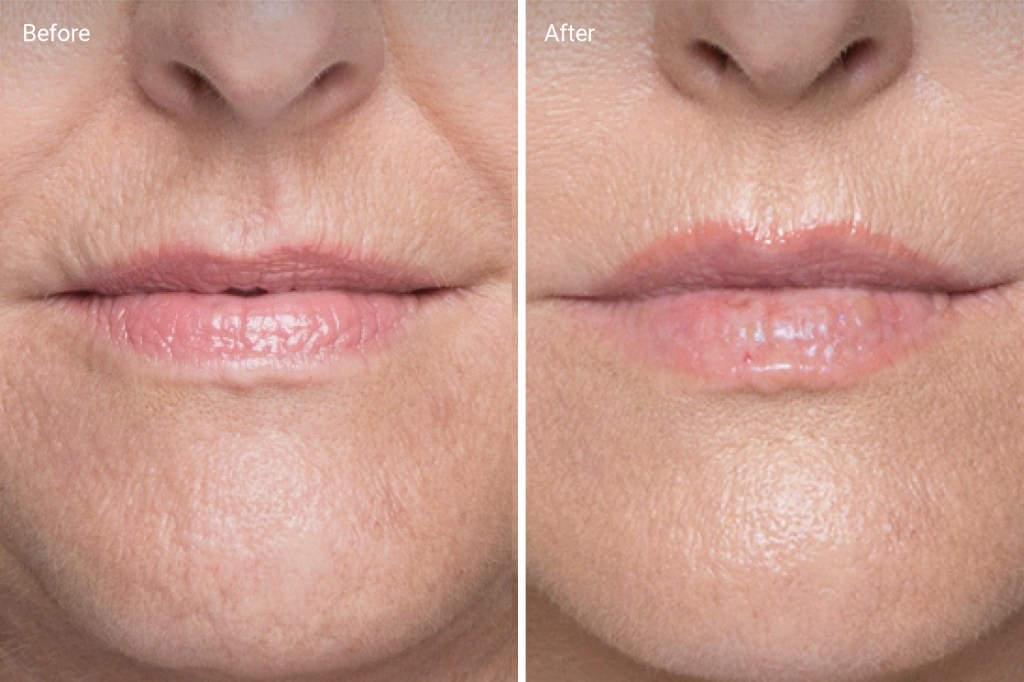
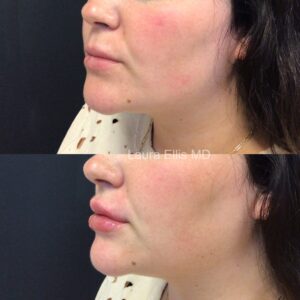
lip lines filler before after medAge-0lip lines filler before after medAge-1lip lines filler before after medAge-2

Making The Right Choice With medAge

Choosing the right lip filler for your specific needs and desires is a highly personalized process. It involves considering your aesthetic goals, lifestyle, and individual response to treatment. 

At medAge, under the skilled guidance of Dr. Laura Ellis, you are assured of a comprehensive consultation to help you make an informed decision. Dr. Ellis brings a wealth of experience and an intimate understanding of facial anatomy, ensuring that every treatment is tailored to complement your natural features.

Whether you are looking for subtle hydration with Restylane, progressive enhancement with Sculptra, seamless integration with Belotero Balance, or collagen stimulation with Radiesse, medAge is ready to guide you in your journey towards attaining your aesthetic goals.

With our team of dedicated professionals, state-of-the-art facilities, and a commitment to patient satisfaction, you are assured of a fulfilling experience at medAge. Our goal is not just to enhance your appearance but to boost your confidence, accentuating your natural beauty while making you feel at home in your skin.

Embrace the transformation and explore the wonders of lip fillers at medAge. Because you deserve to look and feel your best, and we’re here to ensure you do. Book a consultation with Dr. Laura Ellis today, and take the first step towards a more radiant, youthful you.

Ask a Question or Book an appointment at medAge™ in Asheville & Greenville. Call 828-684-1212

__CONFIG_colors_palette__{“active_palette”:0,”config”:{“colors”:{“62516”:{“name”:”Main Accent”,”parent”:-1}},”gradients”:[]},”palettes”:[{“name”:”Default Palette”,”value”:{“colors”:{“62516”:{“val”:”rgb(0, 104, 154)”}},”gradients”:[]}}]}__CONFIG_colors_palette__ Book an Appointment

How long do lip fillers last?

Unveiling the Magic of Lip Fillers at medAge with Dr. Laura Ellis.

Ever wished for fuller, luscious lips that make you feel more beautiful and confident? You’re not alone. Millions around the globe have turned to lip fillers to achieve their dream aesthetic. This modern beauty procedure is a safe and effective way to enhance your appearance, transforming your lips into a shape and size that you desire. In the heart of medAge, Dr. Laura Ellis, a renowned aesthetic practitioner, works her magic, helping patients to unlock their potential for striking beauty with lip filler procedures.

However, a common question among many interested patients is, “How long do lip fillers last?” In this article, we aim to shed light on this important query, highlighting why medAge and Dr. Laura Ellis are your perfect partners in your journey towards achieving the ideal lip contour.

Duration of Lip Fillers: A General Perspective

Typically, lip fillers’ effect can last anywhere between six months to a full year. The exact duration depends on several factors, including the type of dermal filler used, the individual’s body metabolism, lifestyle, and even the injection technique. For example, a person with a higher metabolic rate might metabolize the filler faster, reducing its longevity.

Lip Filler Asheville

Hyaluronic Acid Fillers at medAge

At medAge, we predominantly use Hyaluronic Acid (HA) based fillers. HA is a naturally occurring substance in the body that delivers nutrients and helps the skin retain its natural moisture and softness. This class of fillers is biocompatible and poses minimal risk of allergic reactions.

HA fillers can last anywhere from six months to over a year, depending on the specific product. Some of the popular brands we use at medAge include Restylane and Juvederm. Restylane typically lasts for about six to nine months, while Juvederm can last up to a year due to its unique cross-linked formulation.

Restylane is one of the most popular and effective lip filler products available today.

Learn more about Restylane.

Dr. Laura Ellis’s Precision and Technique

The technique and skill of the aesthetic practitioner play a critical role in how long the fillers can last. Dr. Laura Ellis, with her years of experience and advanced aesthetic techniques, has mastered the art of lip filler injections. Her technique ensures that the filler is administered precisely where it is needed, which not only makes the treatment more effective but also helps prolong the filler’s longevity.

Moreover, Dr. Ellis considers the individuality of each patient, from their facial anatomy to their aesthetic desires, ensuring that the results are natural-looking and in harmony with their overall facial features.

Dr. Laura Ellis

Dr. Laura Ellis, Founder of medAge™

How Lifestyle Can Influence Longevity of Lip Fillers

Our lifestyle choices significantly impact how long the lip fillers last. If you maintain a healthy lifestyle — for instance, by avoiding excessive sun exposure, staying hydrated, maintaining a balanced diet, and refraining from smoking — you can help extend the duration of your lip fillers.

Moreover, following Dr. Ellis’s post-procedure advice, like avoiding strenuous exercise for 24-48 hours after treatment and steering clear of alcohol and blood-thinning medications, can also improve the longevity of your fillers.

Touch-up Procedures at medAge

To maintain the plumpness and contour of your lips, touch-up treatments are typically recommended every six months to a year, depending on the type of filler used and how quickly your body metabolizes it. At medAge, Dr. Ellis closely monitors your progress and can expertly time these touch-ups to sustain your desired aesthetic.

Experience the Difference with Dr. Laura Ellis at medAge

At medAge, we prioritize not just the physical transformation but also the psychological well-being of our patients. Dr. Ellis ensures a comfortable and reassuring experience, aiming to build a long-term relationship rather than a one-time treatment.

Moreover, choosing to have lip filler injections at medAge with Dr. Ellis is not just about enhancing your lips. It’s about a holistic approach to beauty, where we work with you to accentuate your natural features, boost your self-esteem, and motivate you to embrace the best version of yourself.

Remember, every journey begins with a step. If you’ve ever dreamt of fuller, more attractive lips, that first step could be a lip filler procedure at medAge with Dr. Laura Ellis. Are you ready to explore your potential for beauty? We’re excited to accompany you on this transformative journey.

Ask a Question or Book an appointment at medAge™ in Asheville & Greenville. Call 828-684-1212

__CONFIG_colors_palette__{“active_palette”:0,”config”:{“colors”:{“62516”:{“name”:”Main Accent”,”parent”:-1}},”gradients”:[]},”palettes”:[{“name”:”Default Palette”,”value”:{“colors”:{“62516”:{“val”:”rgb(0, 104, 154)”}},”gradients”:[]}}]}__CONFIG_colors_palette__ Book an Appointment